OM-Ant

The Code Was Never the Hard Part

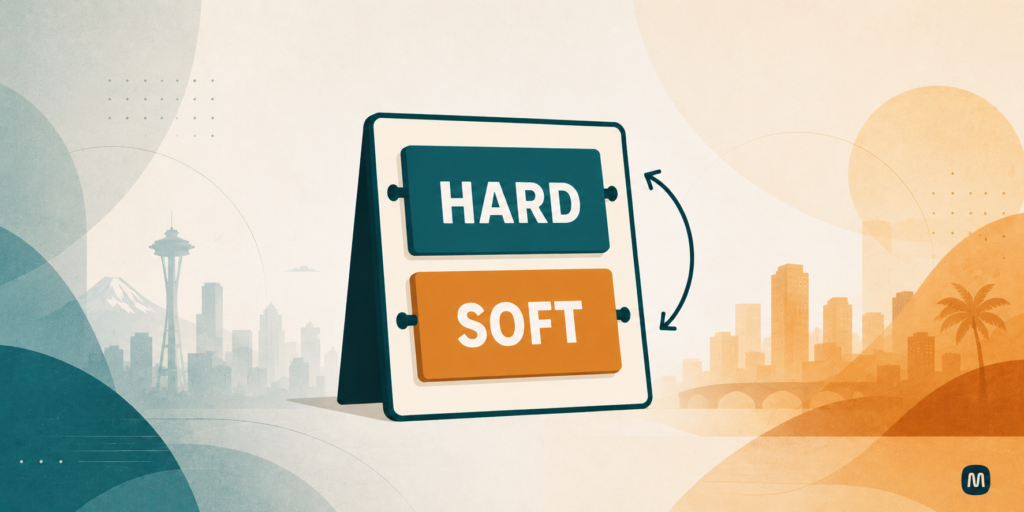
For decades, we organised human skill into two neat categories.

Hard skills were the serious ones. The technical ones. The ones you could put on a CV and point at.

  • Code.
  • Data analysis.
  • Financial modelling.
  • Legal frameworks.
  • Medical procedures.
  • Engineering.

These were called hard because they took time to learn, required credentials to prove, and came with a body of knowledge that not everyone could access. They were the currency of professional credibility. The thing that got you in the room.

Soft skills were everything else.

  • Communication. Empathy.
  • Persuasion. Leadership.
  • The ability to read a room, motivate a team, or sell an idea to someone who was not yet convinced.

These were acknowledged as useful but never quite treated as serious. Most did not have certifications. They could not be easily measured. They lived in the grey area between talent and personality, and nobody could quite agree on how to teach them.

So we called them soft. And in doing so, we told an entire generation of professionals that the human stuff was the easy stuff.

We were wrong. As a software engineer myself who tried for years to convince people of this truth, I was met with deaf ears. AI just proved it in the most public way possible.

Here is what AI exposed about hard skills.

Most of them are formula-based. Not in a dismissive way. But in a precise and important way. They follow logic. They respond to rules. They can be broken down into steps that, if followed correctly, produce a predictable output. That is exactly why they were learnable. And it is exactly why they are automatable.

A machine does not get tired of following steps. It does not cut corners on a Friday afternoon. It does not make the small errors that accumulate when a human has been staring at a screen for six hours. Given the right training data and the right architecture, a machine will execute a formula better than a human every single time.

This is not an insult to the people who spent years mastering those skills. The mastery was real. The effort was real. But the nature of what they mastered, precise, logical, repeatable, was always going to be more vulnerable to automation than anyone admitted while the automation was still theoretical.

GitHub Copilot does not replace the developer who understands the problem. It replaces the developer who only knew how to write the solution once someone else understood it.

That distinction is everything.

Now look at what AI cannot do.

  • It cannot sit across from a grieving family and know exactly when to speak and when to stay quiet. It cannot read the micro-expression that crosses a procurement manager’s face when the price is revealed and adjust the pitch in real time. It cannot sense the energy shift in a room when a presentation is losing the audience and change direction before the audience knows they have checked out.
  • It cannot sell. At least not in the way a great salesperson sells. Because selling is not presenting features and benefits in the right order. Selling is understanding what a person needs to feel before they can say yes. And what they need to feel is different for every person, in every moment, shaped by everything that happened to them before they walked into that room.
  • Marketing at its best is the same. Not the technical execution of a campaign. It is the human understanding underneath it. It is the ability to see a person clearly enough to know what they actually need to hear. To find the emotional truth inside a product or a service and connect it to the emotional truth inside the person you are talking to.

No model trained on human data fully replicates human feelings. It only approximates it. Sometimes impressively. But approximation is not the same as understanding. And in the space between approximation and understanding, the human professional still lives.

Soft skills are hard. They require a depth of human understanding that takes a lifetime to develop and cannot be reduced to a formula because the input, another human being in a specific emotional state, is never the same twice. They are hard because they require presence, judgment, intuition, and the kind of emotional intelligence that comes from having lived, having failed, having sat with someone in their difficulty and found the right words, not because a system recommended them but because you understood.

Hard skills are, in many cases, easier than we thought. Not easier to learn. But easier to replicate. Easier to automate. Easier to hand to a machine that will do them faster and with fewer errors than most humans ever could.

This does not mean technical skills are worthless. The developer who understands the problem deeply, who can translate a messy human need into a precise technical solution, is more valuable than ever. Because what they have is not just the technical skill. It is the judgment that sits above it. The human layer that no tool can replace.

That layer was always the hard part. We just spent decades calling it soft.

The professionals who will thrive in this era are not the ones who can do the most technical things. They are the ones who understand people well enough to do what the tools cannot.

AI did not create this truth. It just finally made it loud enough to hear.

In conclusion, the code was never the hard part. Understanding the person the code was built for was always the hard part.

It still is.

My Last Night in Seattle. A City Built on Honesty.

My last night in Seattle, I was on a bus, tapping my card, waiting to be charged again.

It did not charge me.

A small screen told me I had already paid for this window of travel. That my $3 covered wherever I needed to go within a certain time. No new charge. No penalty for getting back on. Just a system that remembered I had already done the right thing and decided that was enough.

I sat back and watched the city move past the window.

I had spent the day the way you spend a last day somewhere. Trying to hold as much of it as possible before you have to let it go.

I found an African food joint through Google. Followed the pin through unfamiliar streets until the smell told me I was close before the map did. I sat down and ate something that tasted like home and felt, for a moment, like the distance between Seattle and Accra was smaller than it had been all week. You can be impressed by a place and still need something familiar at the end of it. That is not a contradiction. That is just being human.

Then the donation shop. Then the South Center Mall. Then back onto the bus, card in hand, ready to pay again.

And the bus said no. You are already paid for.

I thought about that for a long time on the ride back.

Because what the transit system in Seattle has built is not just an efficient payment process. It is a relationship with its citizens that starts from a completely different assumption than most systems I have encountered.

Most systems assume you will not pay if they do not make you. The barriers, the gates, the turnstiles, the security, all of it is built on the premise that the default human behaviour is avoidance. That, without enforcement, compliance disappears.

Seattle’s system is built on the opposite belief. That most people, given the chance, will do the right thing. That the cost of treating everyone like a potential fare evader is higher than the cost of the few who actually evade.

I walked past the train station and noticed you could board without paying if you wanted to. Nobody stopping you. No barrier between you and the platform. Just the implicit understanding that if you are here, you probably paid. And if you did not, that says something about you, not about the system.

In fact, I asked a lady why this is. She smiled and said, “This city is built on honesty!”

That sentence stayed with me because it is not just a statement about a transit system. It is a statement about culture. About what a community decides to believe about the people inside it.

Every system is built on a belief. The question is whether anyone ever made that belief explicit, or whether it just accumulated quietly over time until it became the air everyone breathes without thinking about it.

The belief underneath Seattle’s transit system is that people are fundamentally trustworthy. The belief underneath its donation shops is that surplus should move toward need. The belief underneath its bus billing, that one tap covers your journey for a window of time, is that your time matters, and so nickel and diming you is not the relationship we want with you.

These are not accidents. They are decisions. Made by leaders, by planners, by communities that sat down at some point and decided what they believed about the people they were building for.

I think about this when I think about the organisations I have been part of. The teams I have led. The systems we built, sometimes deliberately, more often by accident.

Every organisation is built on a belief about people. Some are built on trust. Others are built on control. And you can feel the difference the moment you walk in. Not in the mission statement. Not in the values poster on the wall. It’s in the small things. Whether information flows freely or gets hoarded. Whether people feel watched or felt. Whether the process exists to help people do good work or to make sure nobody can do anything wrong without being caught.

The best leaders I have encountered build like Seattle builds. From trust outward. They design systems that assume good intent and create the conditions for it to flourish. They treat the people inside their organisations the way that bus treated me. You have already shown up. You have already tapped in. We trust you from here.

My last night in Seattle. African food that tasted like home. A donation shop full of things people decided to give rather than keep. A bus that remembered I had already paid.

A city built on honesty.

I am taking that home with me. Not as a souvenir. As a standard.

Because if a transit system can decide to trust millions of strangers every single day, the least I can do is build the same assumption into every team, every process, and every system I am responsible for.

Trust is not naive. It is a design decision.

And it is one of the most powerful ones a leader can make.

Behind Every Effortless Experience Is a Process Someone Designed

I made an order at 11pm on a Tuesday.

By Thursday morning, a box was at my door. The right item. The right size. Packed carefully. Arrived exactly when they said it would.

I did not think about it for a single second. I just picked it up and went inside.

That is the thing about a great process. You never see it. You only experience the result. And because the result feels effortless, it is easy to conclude that it was. That somewhere between my click and my doorstep, things just worked out.

They did not just work out. Someone designed every single step.

Inside an Amazon fulfilment centre, the work is divided with a precision that most organisations never come close to achieving. There are stowers, the people who receive incoming inventory and place items into storage pods, following a system so specific that a banana might sit next to a television remote and a pair of shoes. Not because someone was careless. Because the algorithm knows that randomised placement makes retrieval faster. There are pickers, who receive orders and locate items across a warehouse the size of several football pitches, guided by a system that tells them exactly where to walk and in what order. There are packers, who take the picked items and prepare them for shipping with a standardised process that protects the product and optimises the box size. Then there are the people managing the conveyors, the quality checkers, the sorters, and the drivers.

Every single one of them is a link. And every link knows what it is responsible for.

Remove one link, and my order will not arrive on Thursday. It might arrive damaged, or late, or not at all. Or it might arrive, and something is missing. And suddenly the effortless experience becomes a customer service problem, a review, a lost customer.

The process is not the background to the work. The process is the work.

Most organisations do not operate like this. And the ones that struggle most are usually the ones where process is treated as optional; where the way things get done depends on who is doing them that day; where institutional knowledge lives inside one or two people’s heads and walks out the door every time someone resigns; where a new team member spends their first three months figuring out how things work here because nobody wrote it down.

I have seen marketing campaigns fall apart not because the strategy was wrong, but because nobody agreed on who approved what and by when. I have seen product launches delayed, not because the product was not ready, but because the handoff between teams was never defined clearly enough for anyone to know when their part ended and someone else’s began.

These are not talent problems. The people involved were capable. They were working hard. They were trying. They were trying inside a broken process. And a capable person inside a broken process will produce inconsistent results every time. Not because they are not good enough. Because the system they are operating in was never designed to make them successful.

Process is not bureaucracy. That is the confusion that causes most leaders to underinvest in it.

Bureaucracy is process without purpose. Forms that exist because they always have. Approvals that add time without adding value. Meetings that could have been a document. That is not process. That is the ghost of a process that was never properly designed in the first place.

Real process is the opposite of bureaucracy. It is clarity. It is knowing exactly what needs to happen, in what order, by whom, and what good looks like at each stage. It removes the friction of figuring out the basics so that the people inside it can spend their energy on the things that actually require judgment and creativity.

The Amazon picker is not thinking about where to find the item. The system tells them that. They are focused on speed and accuracy. The process freed them to be excellent at the part that matters.

That is what a good process does for a team. It removes the cognitive load of the predictable so that people can bring their full attention to the unpredictable.

This does not stay at work. It follows you home.

The households that run well are not the ones with the most resources. They are the ones where the predictable things have been decided in advance. When the groceries get bought, and by whom. How the bills get managed. What happens in the morning so that nobody is scrambling for keys while someone else is late for school. The families that seem calm are not calm because life is easy. They are calm because they have built a process for the recurring things so that their energy is available for the things that cannot be planned.

The same is true for personal productivity. The people who consistently produce good work are not the ones with the most talent or the most time. They are the ones who designed their days deliberately. Who decided in advance when they do deep work and when they handle communication.

Process is how ordinary consistency becomes extraordinary output over time.

The leaders worth following understand something that the ones still figuring it out do not.

Your job is not just to set the direction. It is to design the system that gets people there reliably. Not once, not when they are at their best, not when you are watching. Reliably. Repeatedly. Regardless of who is having a hard week.

That is what Amazon built in those warehouses. Not a collection of hardworking individuals hoping it all comes together. A system so well designed that the outcome is predictable before the work even begins.

Your team deserves that. Your family deserves that. You deserve that.

The process is not the boring part of the work. It is the part that makes everything else possible.

Nobody thinks about the process until it breaks.

But somewhere in an Amazon fulfilment centre right now, a stower is placing an item exactly where the system tells them to. A picker is walking the most efficient route through a warehouse the size of a small town. A packer is sealing a box that will arrive undamaged at someone’s door on the day it was promised.

None of those people are thinking about the process either. They are just doing their part, inside a system designed well enough that doing their part is enough.

That is what you are building toward. Not perfection. Just a system good enough that the people inside it can be excellent without having to fight the system to get there.

Build that. For your team. For your family. For yourself.

You Shipped It in a Day. It Broke in a Way That Took Weeks to Fix.

There is a particular kind of Saturday morning that nobody warns you about when you start a business.

Your site is down. Not slow. Down. A customer sent you a message asking if you were still operating. You check your phone, and the screen shows an error that means nothing to you. You open your laptop. Same error. You call the person who helped you set it up, and they do not pick up. You search the error message online and fall into a rabbit hole of forums and technical language that feels like it was written for a different species.

Meanwhile, your business is standing still.

Nobody warns you about that morning. But it comes for almost everyone eventually.

AI changed the calculation. That is the honest starting point of this conversation.

A few years ago, building a website required a developer. Maintaining it required either that same developer on retainer or someone technical enough to understand what was running under the hood. That costs money. Real money. And for a small business or an early stage founder, it was a hard expense to justify.

Then the tools arrived. Wix with its AI builder. Squarespace with its design engine. WordPress, with thousands of plugins that promised to do everything. And then the larger shift, the one that changed everything, AI that could write your code, build your layout, generate your content, and have something live before the end of the day.

Suddenly, the cost of building looked like zero. And the cost of maintenance looked the same.

That was the trap.

Because the cost was never zero. It was just hidden. Deferred. Moved to a later date when you would be less prepared to pay it.

The AI builds the site. But it does not understand your business. It does not know that your checkout flow breaks on certain Android browsers. It does not know that your hosting plan cannot handle the traffic that comes in the week after you run a promotion. It does not know that three of your plugins have not been updated in eight months and are now a security vulnerability sitting quietly in your backend waiting for someone to find it.

The AI builds the structure. You are left to live in it. And most of the time, you do not know what you do not know until something breaks.

This is not a hypothetical. The industry is full of hard lessons.

Knight Capital Group lost 440 million dollars in 45 minutes in 2012 because of a software deployment error. One bad update. One untested release. The kind of thing a proper review process catches before it goes live. They did not have one that day. The company nearly collapsed.

In 2019, Facebook, Instagram, and WhatsApp went down for over 24 hours. A company with some of the most sophisticated engineering talent in the world, with billions in infrastructure, lost a full day of operation because of a configuration error. The financial hit ran into hundreds of millions. The reputational hit was worse.

Those are large companies. But the principle scales down perfectly. An African e-commerce store that goes down on a Friday evening before a weekend sale does not lose hundreds of millions. But they lose their weekend. They lose the customers who tried and did not come back. They lose the trust that took months to build.

The size of the business changes the number. It does not change the lesson.

The vibe coding era made this worse.

Vibe coding is what happens when a non-technical founder uses AI to build a product by describing what they want in plain language and letting the AI write the code. It sounds like liberation. For a certain kind of early-stage builder, it genuinely is. You can move fast. You can test ideas without a technical co-founder. You can ship something real in days instead of months.

But shipping is not maintaining. And fast is not stable.

The sites get built. The apps get launched. And then the founder, who understood the vision but never understood the infrastructure, is left managing something they cannot read. Every update is a guess. Every error is a crisis. Every customisation request goes back to the AI, which sometimes fixes it and sometimes introduces three new problems while solving one.

The professional was not just the person who built it. They were the person who understood what they built. That understanding does not transfer when the AI does the work and the founder takes the credit.

Don’t get me wrong! None of this means AI is the enemy. It is not. The tools are genuinely powerful, and they have genuinely lowered the barrier to building things.

But lowering the barrier to building is not the same as lowering the barrier to running. A car that is easier to buy is not easier to maintain. A house that is faster to construct still needs a plumber when the pipes fail.

The professionals that AI convinced you to replace were not just doing the initial build. They were doing the ongoing thinking. The updates, the security patches, the performance checks, the late-night fixes when something breaks at the worst possible time. They were the ones who picked up the phone on that Saturday morning.

When you remove them from the equation, you do not remove the work. You just take it on yourself. Usually, without the skills, the tools, or the time to do it properly.

The question was never whether you could build it yourself. Because with the tools available today, almost anyone can.

The question is what happens the morning something breaks and the person who understands it is you, alone, staring at an error message, while your business waits.

That morning has a cost. The professional you decided not to hire was the one who was supposed to prevent it.

If you are looking for someone who has built the discipline to manage this properly, I have seen Busyvine do it well. They understand the operational side of web management in a way that most generalist agencies do not. Worth a conversation before that Saturday morning arrives.

And if you want to think through the strategy behind your digital presence, not just the technical maintenance but the full picture, I am always open to a conversation, too.

Cheap at the start. Expensive at the end. That is the hidden cost of doing it yourself.

What Has Not Changed in a 100 Years of New Technology

Morgan Housel opens Same As Ever with a simple and unsettling observation. We spend most of our time studying what has changed. The new technology, the new market, the new way of doing things.

But the more useful study, the one that actually prepares you for what is coming, is everything that never changes. Human greed. Human fear. The need for belonging. The tendency to blame something outside ourselves when things go wrong. He is really writing about people. And people, as it turns out, are the same as they have always been.

I thought about this recently when I watched someone use AI to produce a strategy document in twenty minutes. It was fast. It was formatted beautifully. It said almost nothing.

There is a pattern that repeats itself across history with a consistency that should embarrass us by now.

  1. In 1916, the anxiety was the machine. The industrial press, the factory lathe, the mechanical loom. Craftsmen worried that the tools would replace skill. That anyone with access to the machine would suddenly be equal to anyone who had spent years developing the craft without it.
  2. In 2016, the anxiety was the algorithm. Social media, programmatic advertising, and data analytics. Marketers worried that the tools would level the playing field in a way that made expertise irrelevant.
  3. In 2026, the anxiety is AI. And the conversation is almost word-for-word the same one people were having a hundred years ago.

What nobody talks about is that the craftsmen who understood their craft deeply used the machine to become extraordinary. And the ones who did not understand it used the machine to produce bad work faster. The machine did not change the gap between them. It widened it.

That is what Housel means when he says the same as ever. The technology is new. The dynamic is ancient.

AI does not create skill gaps. It reveals them.

This is the thing that makes people uncomfortable when you say it out loud in a room full of professionals who have been quietly using AI to compensate for gaps they were hoping nobody would notice.

A strategist who understands the problem deeply uses AI to think faster, to pressure test ideas, to cover more ground in less time. The output reflects the quality of the thinking that directed it. The AI is the lathe. The strategist is the craftsman.

A strategist who does not understand the problem uses AI to generate the appearance of thinking. The document looks right. The slides are clean. The framework is present. But underneath it, there is nobody home. No real diagnosis, no genuine insight, no decision that could be defended if someone pushed on it.

The tool produced the same thing in both cases. A document. A strategy. A presentation. What it could not produce, in either case, was the judgment to know whether any of it was actually good.

That judgment is the craft. And craft, as it has always been, belongs to the person. Not the tool.

I have seen this play out in marketing more than anywhere else.

AI can write copy. It can generate campaigns, build briefs, and produce content at a volume that would have required an entire team two years ago. And so there is a temptation, a very understandable one, to hand the thinking to the tool and manage the output.

The problem is that marketing, at its best, is not a production problem. It is a human understanding problem. It is the ability to see a person clearly enough to know what they actually need to hear, not what sounds right, not what the brief says, not what the AI generates when you describe the target audience in three sentences.

That ability does not come from the tool. It comes from years of paying attention to people. Of getting it wrong and understanding why. Of sitting with a brief long enough to find the real question underneath the obvious one.

AI amplifies that ability when it exists. When it does not exist, AI produces very polished work that does not move anyone.

Housel makes another observation in Same As Ever that I keep returning to. He says that the biggest risk is always the one nobody is talking about. The visible risks get managed. The invisible ones do the real damage.

The visible risk of AI is that it replaces jobs. Everyone is talking about that one.

The invisible risk is quieter and more corrosive. It is the gradual outsourcing of the thinking itself. Not the execution, the thinking. The slow atrophy of the judgment muscle because the tool is always there to do the heavy lifting. Until one day the tool fails, or the situation is too specific for the tool to handle, and the person behind it reaches for their own thinking and finds it has grown soft from disuse.

That is the skill gap worth worrying about. Not the one the tool creates. The one the tool conceals until it is too late.

The best professionals in any era have always understood something their peers took longer to learn.

The tool is the easy part. Anyone can access the tool. The hard part, the part that has never changed and will not change regardless of what the tool becomes, is the quality of the person directing it.

Bring your best thinking to the tool, and it will make you formidable. Bring your laziness to it, and it will make you faster at being average.

The variable was never the tool.

It has always been you.

The Quiet Uncertainty at the Centre of African Leadership

Walk through any major African city and pay attention to what you see.

  • Glass towers that belong in Dubai.
  • Churches that look like they were lifted from the American South and dropped onto West African soil.
  • Office buildings with no memory of the climate they sit in, no acknowledgment of the sun that beats down on them, no relationship with the land they stand on.
  • Malls with names that gesture toward European luxury.
  • Hotels designed to make a foreign visitor feel at home while making a local feel like a guest in their own city.

Now ask yourself: whose idea of progress is this?

London has an identity. You feel it before you understand it. In the red brick, the Georgian terraces, the way old and new sit together without apology. The city knows what it is. It has argued with itself across centuries and arrived at something that could only be London.

New York has an identity. Relentless, vertical, unapologetic. You know where you are the moment you arrive. The city does not explain itself. It simply is.

Beijing has an identity. Ancient and modern in deliberate conversation. The Forbidden City and the CCTV headquarters occupy the same skyline, the same story, the same country’s idea of itself across time.

Accra could have an identity. Nairobi could. Lagos could. AbidjanKigaliAddis Ababa. Every one of these cities sits on soil with thousands of years of architecture, craft, philosophy, and aesthetics embedded in it.

But somewhere between then and now, we stopped building from that place.

We started building from someone else’s idea of what a serious city looks like. 🙁

The architecture is just the most visible symptom, which is the easiest thing to point at. The deeper problem runs through everything.

Take religion.

I want to be careful here because faith is personal, and this is not an argument against belief. But it is an argument about origin and ownership and what happens when a people adopt a spiritual framework that was, in many cases, delivered to them by the same hands that took everything else.

Christianity as practised across much of Africa did not arrive as an invitation. It arrived with colonisation. It was used, deliberately and strategically, to replace existing spiritual systems, to delegitimise African cosmology, to make people strangers to their own ancestors. And it worked. The borrowed became more sacred than the original. And the original became something to be ashamed of.

The same is true in parts of North and East Africa, where Islam is prevalent, though the history is different and the dynamics more complex.

The point is not that the faith is wrong. The point is what it signals about identity when a continent’s dominant spiritual frameworks both arrived from outside, both required the suppression of what existed before, and both are now so deeply embedded that questioning them feels like heresy rather than history.

Now bring this into the boardroom.

Because this is where it becomes a management problem, a leadership problem, a productivity problem that shows up in quarterly results and brand strategies, and the way African companies price themselves in global markets.

The African executive who was educated in a Western system, worships in an imported tradition, works in a building designed without reference to local context, and leads a company modelled entirely on a Western corporate template, is making decisions from a borrowed identity. And borrowed identities have a particular weakness. They are always slightly uncertain of themselves. Always looking outward for validation, and always measuring success by someone else’s standard.

You see it in how African companies present themselves. The mission statements that sound like they were written in Delaware. The marketing that mimics global campaigns without asking whether the insight underneath them is relevant to the people being spoken to. The pricing that undersells, because somewhere deep in the organisation, there is an unexamined belief that what comes from here is worth less than what comes from there.

This is not a confidence problem in the way motivational speakers describe it. It is an identity problem. You cannot project clarity outward when there is confusion at the centre.

The companies that are breaking through globally from this continent (Africa) are the ones that stopped trying to look like something else.

The identity that Africa buried is not a liability in the global market. It is the advantage that African businesses have not yet learned to use.

The question for every leader reading this is uncomfortable but necessary.

When you make decisions, whose framework are you using? When you build your culture, whose template are you following? When you define what success looks like for your organisation, whose definition are you reaching for?

If the honest answer is that you are not entirely sure, that is worth sitting with. Because an organisation takes the shape of the identity at its centre. A leader who has not done the work of knowing who they actually are, beneath the education and the titles and the frameworks borrowed from other contexts, will build something that does not quite know what it is either.

And organisations that do not know what they are cannot communicate clearly, cannot price themselves correctly, cannot attract the right people, cannot retain them, cannot build cultures worth belonging to.

Identity is not a soft topic. It is the foundation on which everything else is built.

We have been building on someone else’s foundation for long enough. The cracks show up everywhere, in our cities, in our boardrooms, in the quiet uncertainty of talented people who have achieved everything they were told to want and still feel like something is missing.

What is missing has a name. We built everything. Just not in our own image.

The most productive thing an African leader can do right now is not learn another framework. It is unlearn the belief that the framework has to come from somewhere else.

They Never Learned Marketing. That Is Why They Are So Good At It.

There is a man who walks my street most mornings. He carries his goods on his head. No shop, no signage, no logo. Just him, the sun, and whatever he has decided to sell that week. Some mornings, it is phone chargers. Some mornings, it is cooking oil in small sachets. Once it was umbrellas, the week before the rains came, which is either good timing or good instinct. Probably both.

What he does not do is tell you what he is selling.

He tells you what your life would look like if you bought it.

Not “I have phone chargers.” It is “your phone will not die on you today.” Not “cooking oil, fresh stock.” It is “your soup will be ready before your husband gets home.” The product is almost beside the point. What he is selling, always, is the version of your day that goes better because you stopped and paid attention to him.

I have sat in marketing meetings that lasted three hours, but did not communicate half as much.

There is a concept that gets taught in business schools called the “jobs to be done” framework. The idea is simple: people do not buy products. They hire them to do a job in their lives. A person does not buy a drill because they want a drill. They buy it because they want a hole in the wall. They buy it because they want the painting hung. They buy it because they want the house to feel like home.

The framework has a name, a body of research, professors who have written books about it, and courses you can pay a lot of money to take.

The man walking my street never heard of it.

He has just been practising it every single morning because his livelihood depends on getting it right.

That is the thing about informal sellers that formal businesses keep missing.

They cannot afford to be vague. There is no awareness campaign, no brand recall study, no “we are playing the long game.” There is just this moment, this person walking past, this window of maybe four seconds before they are gone. Every word has to earn its place. Everything that does not move you toward yes gets cut, not in a brand review meeting six weeks later, but in real time, on the street, because it did not work yesterday.

That pressure produces clarity. The kind of clarity that most marketing teams spend entire quarters trying to manufacture.

The outcome-first pitch is not a technique the informal seller learned. It is what survived. Everything else got left behind because it did not convert.

There is something else they do that I find even harder to teach in a boardroom.

The local medicine sellers. The ones who set up at the roadside or appear at markets with their remedies, their roots, their preparations. They do not just tell you what the product does; they show you how it is made. Right there. The leaves, the bark, the proportions, the process. They walk you through all of it out loud, in public, to anyone who will stop and watch. Check TikTok lately. There are so many of them there.

And then at the end, they say: If you cannot find these ingredients yourself, I have them. If you do not have time to prepare it, I have it ready.

Think about what that move is doing.

It is the opposite of what most formal brands are taught to do. Protect the formula. Guard the process. Never show too much. The thinking is that if you give people everything, they will not need you.

But the medicine seller knows something more true than that. Showing you everything is not a risk. It is the proof. It says: I am so certain of what this does, I will teach you to make it yourself. The demonstration is the pitch. The transparency is the trust. And the trust is what closes the sale.

Because here is what they understand that the boardroom keeps forgetting: people are not really going to make it themselves. Life does not work that way. They are busy. The ingredients are scattered. The preparation is unfamiliar. What the demonstration does is not give the product away. It removes every remaining doubt.

By the time they say “contact me if you cannot find the ingredients,” you already believe in the product completely. Because you just watched someone who clearly believes in it more than anyone paid to sell it ever could.

That is a level of marketing confidence that most formal brands cannot get to. Not because they lack the product. But because they do not trust it enough, or their customer enough, to show everything and still believe the sale will come.

I think about this when I sit with campaign briefs.

We spend a lot of time describing the product. Its features, its qualities, what makes it different from the last version of itself. We talk about what it is before we ever get to what it does for you. And even then, what it does is often written in the language of the brand rather than the language of the person standing in the heat deciding whether to stop walking or keep going.

We build personas. We run focus groups. We brief agencies. We review copy, revise it, align it with the brand voice, get it signed off, and send it out into the world, hoping it lands.

The man on my street does all of that in four seconds. In his head. While balancing things on it.

I am not saying throw out the strategy. I am not saying informal is always better than structured. There are things that scaling requires that a street seller does not need to worry about.

But I am saying that somewhere between the brief and the final approved copy, something often gets lost. The human being on the other end. The specific moment in their day that your product is supposed to improve. The outcome they are actually trying to get to.

They remember that. We keep forgetting it.

We optimise for impressions. They optimise for the sale.

One of those is a business metric. The other is a conversation with a real person about their real life.

The best marketing has always been the second one. We just built enough infrastructure around it that we sometimes forget which one actually matters.

Incognito Rasta: The Man in the Suit Who Knows Every Popcaan Lyric

My friend called me Incognito Rastaman. He said it laughing. The kind of laugh that is also a little bit of an accusation. We had been on a Snapchat streak, the two of us, the way old friends do when they are not close enough anymore to call but not distant enough to lose completely.

ut we were close once. Closer than that word usually means.

We shared a room. The same four walls, the same ceiling, the same nights that stretched long because we were young and had nowhere urgent to be. He was finding his voice as a DJ. Reggae shows, events, and radio. I used to play guitar for him. Ragga rhythms, slow and heavy, while he practiced over them. I knew every Damian Marley, Vybz Kartel, Pressure Buss Pipe lyric: every riddim worth knowing. Music was not something we consumed in that room. It was something we made. Something we lived inside.

Then I went into the corporate world. And somewhere along the way, I packed the rastaman into a bag and left him at the door.

He noticed.

Here is what nobody tells you about ambition. It does not just ask for your time. It asks for your taste. Your references. The things you talk about when the conversation gets comfortable. It asks you to read the room so well that eventually you stop being someone who reads the room and become someone afraid to be read.

Corporate culture has a sound. A dress code for personality. Some things signal seriousness, and things that signal that you are not quite serious enough. And reggae, somewhere in the unwritten rules of the rooms I was trying to enter, did not make the list.

So I made a quiet decision. Not a dramatic one. I did not sit down and choose to hide anything. It happened the way most small surrenders happen. Gradually. Reasonably. One adjusted reference at a time. One unplayed playlist at a time. One moment of deciding that this particular part of me was better kept offstage.

I told myself it was just professionalism. Context-switching. Knowing your audience.

It was also a little bit of shame dressed up in sensible language.

I have met many versions of this person.

  1. The woman who grew up speaking her mother tongue at home but trained herself out of the accent because she decided it made people take her less seriously.
  2. The man who loves Afrobeats but curates a different persona for LinkedIn.
  3. The person who code-switches so fluently that they sometimes forget which code is the original.

We do it because it works. That is the truth that the inspirational version of this story skips over. Fitting in has real returns. The adjusted accent gets the callback. The curated persona gets the engagement. The incognito version of you moves through certain spaces with less friction.

But friction is not always the enemy. Sometimes, friction is just the feeling of being fully present. Of taking up the space your whole self requires instead of the smaller, tidier space your edited self fits into.

The cost of the edit is subtle. It is not that you fail. It is that you succeed as someone slightly less than who you are. And over time, that gap between the self that shows up and the self that stays home becomes its own kind of exhaustion.

There is a version of professionalism that is genuinely about the work. Showing up prepared. Communicating clearly. Being someone people can rely on. That kind of professionalism has nothing to do with your taste in music or where you came from or what you sounded like before the world started measuring you.

And then there is a version of professionalism that is really just conformity with better branding. That version asks you to shrink. To sand off the edges. To become a more palatable, more legible, more inoffensive version of the person you actually are.

That second version does not make you more professional. It just makes you easier to overlook.

The most interesting people I have met in boardrooms are the ones who brought something in with them. A perspective that did not come from the same three business schools and the same five frameworks that everyone else was citing. A way of seeing that was shaped by something outside the usual coordinates of corporate life.

Those people do not succeed despite the thing that makes them different. They succeed because of it. The difference is not the obstacle. The difference is the advantage. It just takes longer to see that when you are standing at the door deciding what to leave outside.

My friend (Jahtaman) called me Incognito Rastaman, and I laughed.

Because he was not just describing a music preference I had quietly archived. He was describing the version of me that used to sit in our shared room at night, guitar in hand, playing ragga rhythms while he practiced his sets. The version of me that knew every lyric, felt every bassline, and never once thought that any of it was something to be managed or hidden or apologised for.

That person did not disappear when I put on the suit. He just stopped being invited.

I do not think the answer is to walk into every boardroom playing Damian Marley. Context still matters. Reading a room is still a skill worth having.

The suit is real. The guitar is also real. The lyrics, the room, the friend, the music we made before either of us knew what we were becoming. All of it is real. All of it is mine.

You have been code-switching so long that you forgot it was a choice. It still is.

Hands Got Me Here. Head Got Me Further. Heart Changed Everything.

There is a question nobody asks you when you get promoted.

Not “are you ready?” That one gets asked. Not “do you have what it takes?” That one gets implied. The question nobody asks is this: are you willing to become a different person?

Because that is what each step up actually requires. Not just more skill. A different way of seeing the work. A different relationship with the people around you. A different idea of what your job even is.

I learned this the hard way. Three times. Yes o. Three solid times.

The first version of me was all hands.

And I was good at it. That is the truth. I could execute. I could take a brief and turn it into something real. I was so fast, I was reliable, and I took pride in the quality of what I produced. My value was visible. You could point at it.

When you are an executor, your hands are everything. What you make is who you are. And there is a deep satisfaction in that. Something ships. Something works. You did it.

The problem is that hands are addictive. When you are good at doing things, doing more things feels like the natural answer to every problem. Something is not working? Do more. The team is slow? Pick up the slack. A project is falling behind? Stay later.

I stayed later a lot.

And I got rewarded for it. Which is how I ended up getting promoted into management without anyone telling me that the thing I was being rewarded for was exactly the thing I now needed to use less.

The second version of me had to learn to use my head.

Not because I had not been thinking before. But management thinking is a different kind of thinking. It is not about how to do the work well. It is about which work should be done at all. It is about why, not just how.

This transition was uncomfortable. My instinct was still to jump in, to fix, to produce. But a manager who does everything themselves is not a manager. They are just a very stressed individual contributor with a team watching them.

I had to learn to sit with the discomfort of not doing. To ask harder questions instead of providing faster answers. To look at a plan and say “this is moving but is it going anywhere?” To have the conversation that slows things down now so they do not fall apart later.

I had to learn to think out loud with people instead of presenting finished conclusions. To say “I don’t know yet” and mean it as a position, not a failure.

The head is a strange muscle for someone used to leading with their hands. It asks you to be slower. More deliberate. More comfortable with uncertainty. Less interested in being the one who did it and more interested in whether it was the right thing to do.

It took me longer than I want to admit to make that shift fully. But when I did, the work changed. The team changed. Things that used to depend on me started running on their own.

The third version of me had to open up something I had kept pretty closed.

I was in a one-on-one with someone on my team. We were supposed to be talking about a project update. Timelines, next steps, the usual.

But she sat down and something was different. Not upset exactly. Just quietly absent. Like part of her had already left the room before she walked in.

I had noticed it for a few weeks. The slightly shorter answers. The ideas she used to volunteer that she had stopped offering. The energy that used to fill her side of every conversation, gone a little flat. I had noticed all of it and done what busy managers do. I filed it away. Told myself she was probably tired. Probably just having a week.

I almost opened my laptop and started the agenda. Then I paused and asked how she was doing. Not as a formality. I put the laptop down and asked her properly.

She looked at me for a second like she was deciding whether I meant it.

Then she told me.

It was not a breakdown. There was no single thing that had gone wrong. It was quieter than that and somehow worse. She said she felt invisible. That her ideas had been going nowhere for so long she had stopped having them. That she did not know if she was growing inside this job or just getting older in it. That she had been trying to show me this, in small ways, for months. A comment here. A question there. And I had been too deep in the work to look up long enough to see her.

She was not angry. That is the part that stayed with me. She was just tired of being unseen.

I sat with that for a moment. Then I realised something that changed how I have led ever since.

I had been managing her work. I had never once stopped to lead her.

That is the difference the heart makes. Hands produce things. Head directs things. Heart sees people. And people who feel seen work differently. They take more risks. They tell you the truth earlier. They stay longer and try harder, not because they have to but because they want to.

Heart is not softness. It is not popularity. It is not avoiding hard conversations. In fact, once I started leading with more heart, the hard conversations became easier. Because people trusted that I was having them for the right reasons.

Leadership at that level is not about having all the answers. It is about making people feel like they are worth investing in. Like their growth matters to you beyond what it produces for the business.

That shift changes you. Not just as a manager. As a person.

So here is the staircase as I understand it now.

You start with your hands. You build something real. You earn your place. That matters, and it should not be skipped.

Then you are asked to move up. And if you are lucky, someone tells you that the move is not just about doing more. It is about doing differently. About pulling your hands back enough to let your head lead. About thinking instead of just executing. About building something that works without you at the centre of it.

And then, if you keep growing, you are asked to make the hardest shift of all. To care. Genuinely. About the people, not just the performance. To understand that your job is now to make other people better. To see that the most powerful thing you can do some days is put the agenda down and just listen.

Most people get stuck somewhere on that staircase.

The executor who got promoted but never stopped executing. The manager who thinks brilliantly but leaves a trail of burned-out people behind them. The leader who is loved but cannot hold the team to anything because they never learned to make hard calls.

None of these are bad people. They are just people who made one transition and thought they were done.

The work is never done. Each level asks you to add something new while keeping what you already built. Hands, then head, then heart. On top of each other.

That is the staircase. And nobody draws it for you.

You just have to keep climbing until you figure out what the next step is asking of you.

If you are somewhere in the middle of one of these transitions right now, that discomfort you feel is not a sign that you are failing. It is a sign that you are growing. Keep going.

The Poverty Premium: Why the Poor Often Pay More

Poverty is often understood as the absence of money. Yet in many societies, poverty is not merely a financial condition; it is also an expensive way to exist.

This is one of the great contradictions of modern economic life: those with the least financial capacity frequently pay the highest long-term costs for basic living. Meanwhile, those with greater financial stability often spend less proportionally while enjoying better quality, convenience, and access.

The wealthy buy in bulk.
The poor buy in fragments.

The wealthy pay once.
The poor pay repeatedly.

And over time, repetition becomes expensive.

This phenomenon may be described as the poverty premium, which is the hidden extra cost attached to living without financial margin, long-term stability, or purchasing power.

The Economics of Buying “Small Small”

In many parts of the world, especially within developing economies, daily survival is often structured around fragmented consumption.

A financially stable household purchases food in large quantities monthly or quarterly. A low-income household buys food daily in smaller portions. One family purchases a large internet subscription with lower average costs; another repeatedly purchases small mobile data bundles at higher cumulative rates.

The same pattern exists in transportation, housing, electricity, healthcare, and education.

The wealthy often have enough capital to access discounts, durable products, subscriptions, insurance, and long-term savings opportunities. The poor, however, are frequently forced into immediate purchasing decisions designed around survival rather than efficiency.

This is even clearer in how people buy internet in certain parts of Africa. For example, a large package can work out to something like $100 for 1TB of data. But many people cannot afford to pay that much at once, so they buy small bundles repeatedly, sometimes paying around $1 per GB or more.

Over time, this becomes very expensive. What looks cheaper in the moment ends up costing more in total. People are not just paying for internet data. They are paying for the fact that they cannot pay in bulk.

The irony is difficult to ignore: poverty often carries a premium.

When Urgency Becomes Expensive

Financial instability creates urgency, and urgency is rarely cheap.

A person with savings repairs a small problem before it escalates. A person without savings postpones intervention until the issue becomes a crisis. What could have remained manageable eventually becomes costly.

The same logic applies to health. Preventive healthcare is cheaper than emergency treatment, yet many people cannot afford preventive systems because survival already consumes their income.

Without margin, every unexpected expense becomes disruptive. Every delay becomes dangerous. Every financial decision becomes reactive rather than strategic.

Modern economies reward long-term planning, but many people are trapped in conditions that demand short-term survival.

And survival, by nature, prioritizes immediacy over efficiency.

The Wealth Advantage: Access, Scale, and Patience

One of the least discussed advantages of wealth is not luxury, but efficiency.

Wealth provides access:

  • access to lower interest rates,
  • access to investment opportunities,
  • access to ownership,
  • access to networks,
  • access to time.

The wealthy can afford patience. They can wait for opportunities, negotiate better deals, and absorb temporary shocks without collapsing financially.

Markets naturally reward this kind of stability.

Bulk purchasing reduces costs. Ownership reduces recurring payments. Investments generate compounding returns. Insurance reduces exposure to crisis. Credit becomes a tool for expansion rather than survival.

In contrast, financial instability forces people into cycles of repetition:

  • repeated borrowing,
  • repeated payments,
  • repeated emergencies,
  • repeated dependence on short-term solutions.

The wealthy buy permanence.
The poor often finance temporary relief.

Debt: A Tool for Some, a Trap for Others

Here’s my favorite.

Debt reveals the poverty premium in one of its clearest forms.

For the financially secure, credit is often strategic. Loans are used to acquire appreciating assets, expand businesses, finance education, or create additional streams of income.

For the financially vulnerable, debt frequently serves a different purpose. It becomes a means of survival: paying rent, buying food, and handling emergencies.

The same financial instrument exists in both realities, but the outcomes are profoundly different.

One person uses debt to multiply value.
Another uses debt to postpone hardship.

This distinction is important because it demonstrates that financial systems often reward existing stability while penalizing instability. Those with stronger financial positions receive better rates, better terms, and greater flexibility. Those with weaker positions encounter higher risks and higher costs.

Thus, the burden of financial pressure often falls most heavily on those least equipped to carry it. Hmm!

The Psychological Cost of Poverty

The poverty premium is not only economic. It is psychological.

Constant financial pressure alters decision-making. It reduces long-term thinking and increases short-term survival behavior. Under persistent uncertainty, people naturally prioritize immediate relief over future optimization.

This is human behavior.

When survival becomes the dominant concern, planning becomes difficult. Risk tolerance changes. Financial mistakes increase.

Over time, poverty becomes more than a condition of limited resources; it becomes a condition of limited strategic freedom.

Conclusion: The Hidden Cost of Living Without Margin

The poverty premium forces society to confront an uncomfortable truth: poverty is expensive.

Not because poor people choose inefficiency, but because financial instability limits access to the systems that reduce costs over time.

Wealth is not merely about possession. It is about leverage, efficiency, and escaping repetition.

The wealthy buy permanence.
The poor often buy survival one day at a time.

And perhaps this is the deepest tragedy of economic inequality: those with the least financial resources are often required to spend the most energy, make the most sacrifices, and absorb the highest long-term costs simply to maintain ordinary life.

In modern economies, poverty is not only a social condition. It is often a pricing model.

Let's discuss how my leadership can drive your next strategic initiative